
If you’ve been wondering what to see in Venice in 2 days, you’ve come to the right place. Venice is a city like no other.
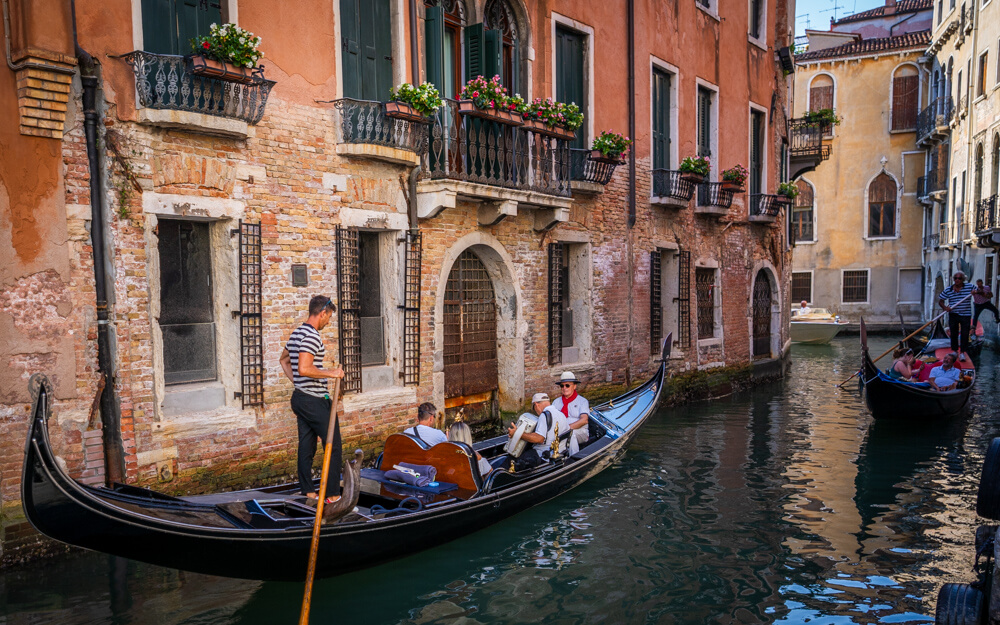
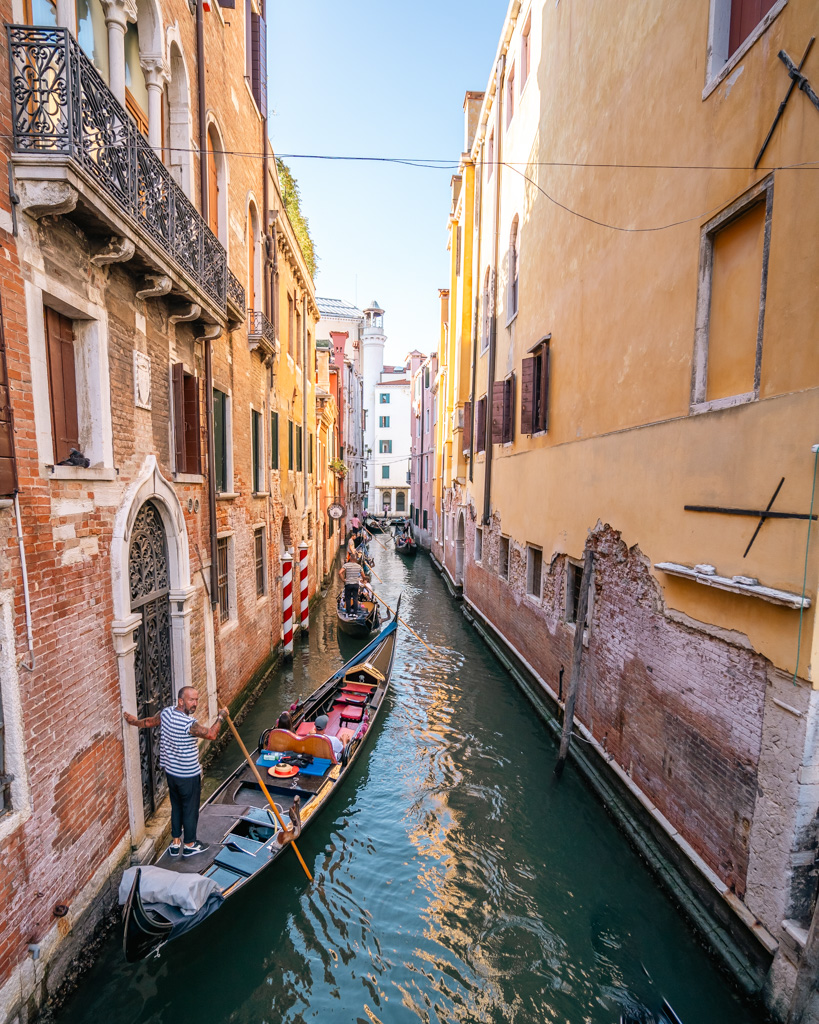
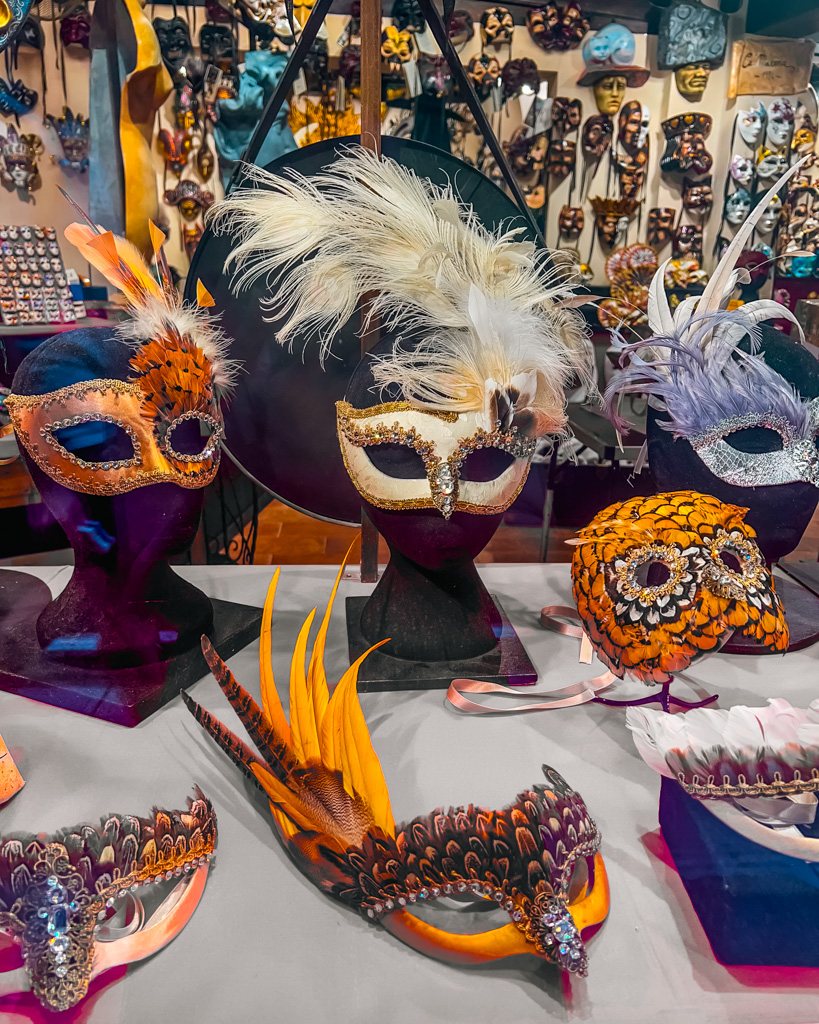
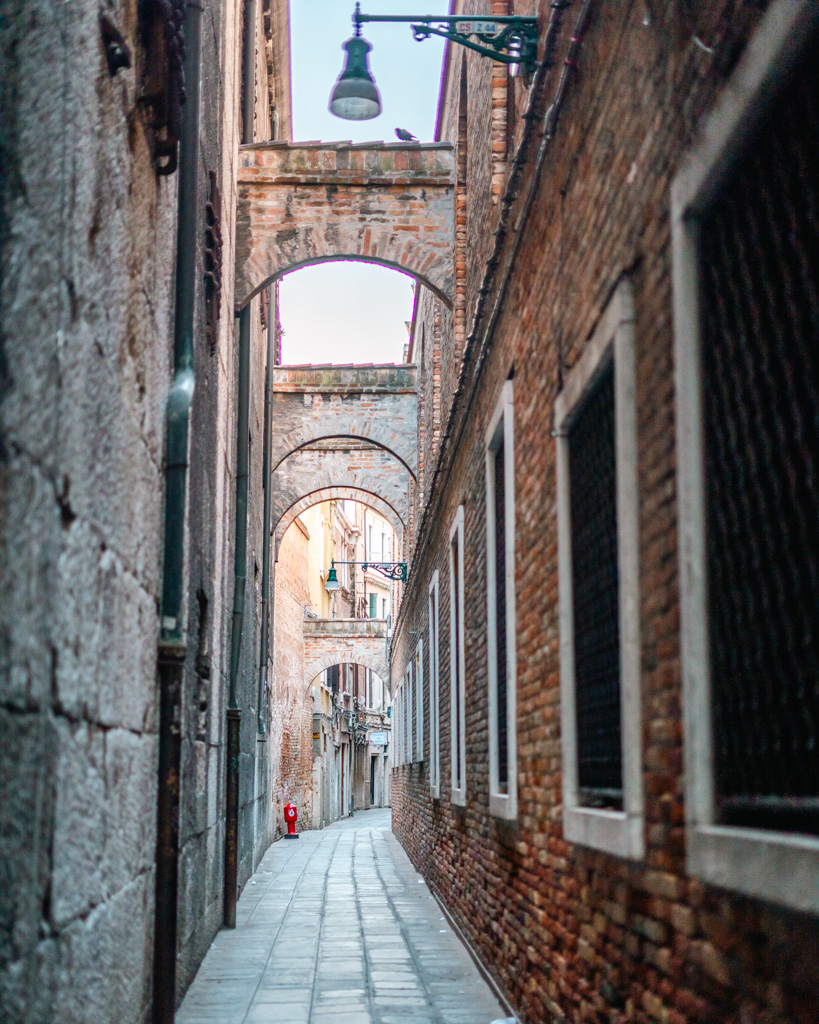
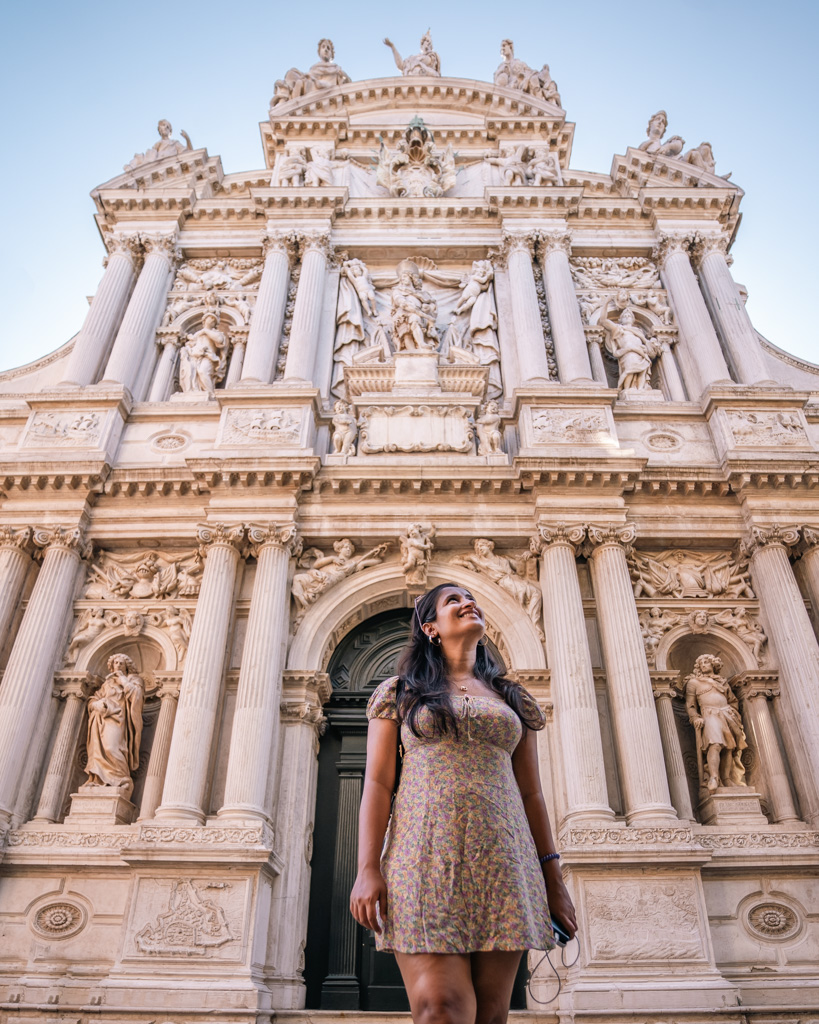
Built in a lagoon with meandering canals, this city makes you feel like you’re stepping into a dream that is full of gondola rides, beautiful bridges, crumbling buildings and stunning piazzas. Don’t believe me? Scroll through the images below for a sense of what you’re in for.
This 2-day Venice itinerary and travel guide will help you plan your days in a way that’ll maximise your time on your Italy trip. You’ll not only hit the main spots but also venture off the main tourist trail to quieter areas that you’ll love.
Is 2 days in Venice enough?
Yes, two days in Venice is enough to see the main highlights of the city yet have time to stroll around some offbeat spots. However, it will be a jam packed itinerary (yet leisurely enough). You will need atleast one more day for a slower trip or to see more.
We spend 2 days (more like 1.5 days here) on our 3-week Italy trip and thought that it was enough.
When to visit Venice
Venice can be visited all year round. It is most crowded during the summer months of July and August and least crowded during the winter months. The main factor to consider, however, is the high tide flooding.
On a couple of days each year, Venice’s water levels rise and parts of the city flood. This is referred to as Acqua Alta (“high water”) . While this flooding can happen at any time of the year, it mostly happens between October and March, especially in November and December. This high tide flooding is nothing to be afraid of since it’s been the norm for locals for centuries. The city functions almost as usual during such floods and even cafes at San Marco are open despite the water.
If you’d like to avoid visiting during such a time, then do check this website when planning your trip. Typically, if water level rises above the 100 cm mark, the city is on alert and Aqua Alta starts at 110 cm.
How to get around Venice
Modes of transport
Before we visited Venice, I was confused about whether the city had roads at all apart from canals because all I ever saw online were canals. Well, Venice does have streets along with canals. However, these streets do not have any form of transport; they’re only meant for walking. And if you need transport, you need to take a vaporetto (water bus), traghetto (to cross the Grand Canal only), or a water taxi (fastest and costliest). There are also ferries that takes you around the wider lagoon to neighbouring islands.
The famous Gondolas are only a tourist attraction meant for a slow and leisurely experience and not for the journey.
For this itinerary, you may not need any transportation as such and trust me, after seeing the prices, you’ll want to walk everywhere too. A single ride on a vaporetto costs about Euro 7.5 per person. But incase you need to take any transport, simply buy a ticket for one ride, there is no need for a vaporetto pass or anything like that if you’re okay walking. Venice is best enjoyed on long walks anyway!
How to reach Venice
To reach Venice from the Marco Polo Airport, use either the water buses, water taxis or shuttle buses that run every 30 minutes to Piazzale Roma. We used the shuttle bus and it was quite convenient. From Piazzale Rome, you can walk it or take the Vaporetti (small ferries) to a destination close to your hotel or directly take a water taxi.
If you wish to arrive by train, then take the train to Venice Santa Lucia train station (Venezia Santa Lucia). Venice Santa Lucia is on the island of Venice so you can easily take a vaporetti to reach a stop close to your hotel and walk the rest of the way or take a private water taxi that drops you right at your hotel.
Read this post if you’re still confused and need more information on how to get around.
Where to stay in Venice
San Marco (less than 500 metres from St.Marks Basilica/city centre)
I would recommend staying as close to St. Mark’s Square (Piazza San Marco/San Marco/Castello) as possible. Staying in this area will ensure you’ll be close to all the main attractions. However, this can be the most pricey and crowded area in the city.
Luxury: St. Regis Venice or The Gritti Palace
Mid-range: Palazzo Keller or Hotel Rio
Bugdet: Residenza La Loggia or Hotel Bel Sito e Berlino
Dorsoduro
If you’re looking for a quieter area then opt for Dorsoduro and stay near Accademia Bridge. It is perfect as you can easily walk to the San Marco area through the Accademia Bridge as well as walk to the bus stop at Piazzale Roma. We stayed here at the Airbnb CA’ MARTINA **** S.Margherita 1.7 km away from the city centre and didn’t mind it at all since walks in Venice are absolutely wonderful. We never took any transport within Venice.
Affordable Luxury: Hotel Nani Mocenigo Palace
Mid-range: Pensione Accademia – Villa Maravege
Bugdet: Hotel Al Malcanton
2-day Venice itinerary
Day 1 in Venice
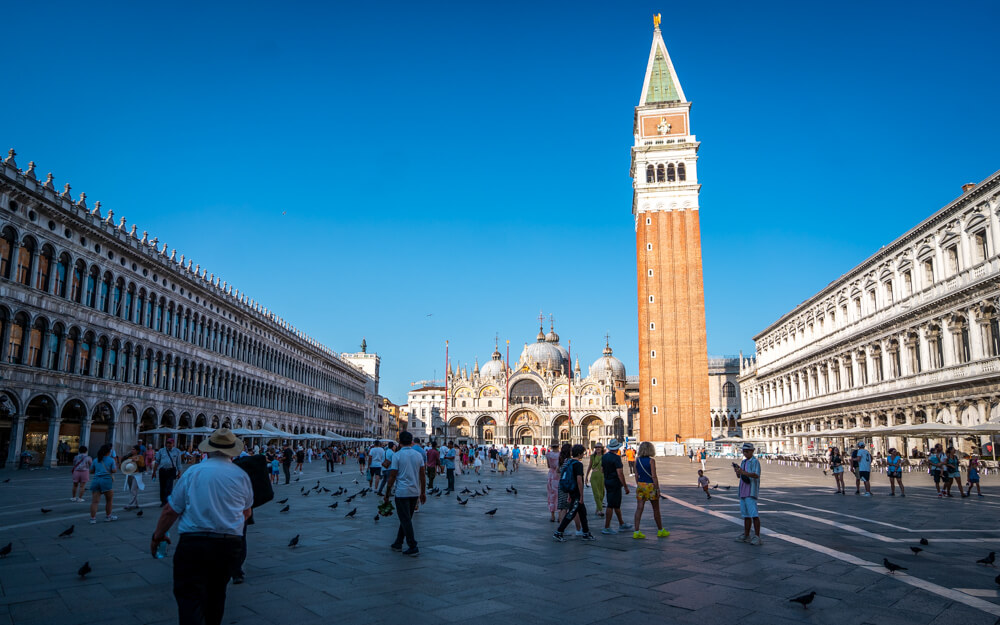
On your first day of your 2 days in Venice, head straight to St. Marks Square (Piazza San Marco)—the city centre of Venice.
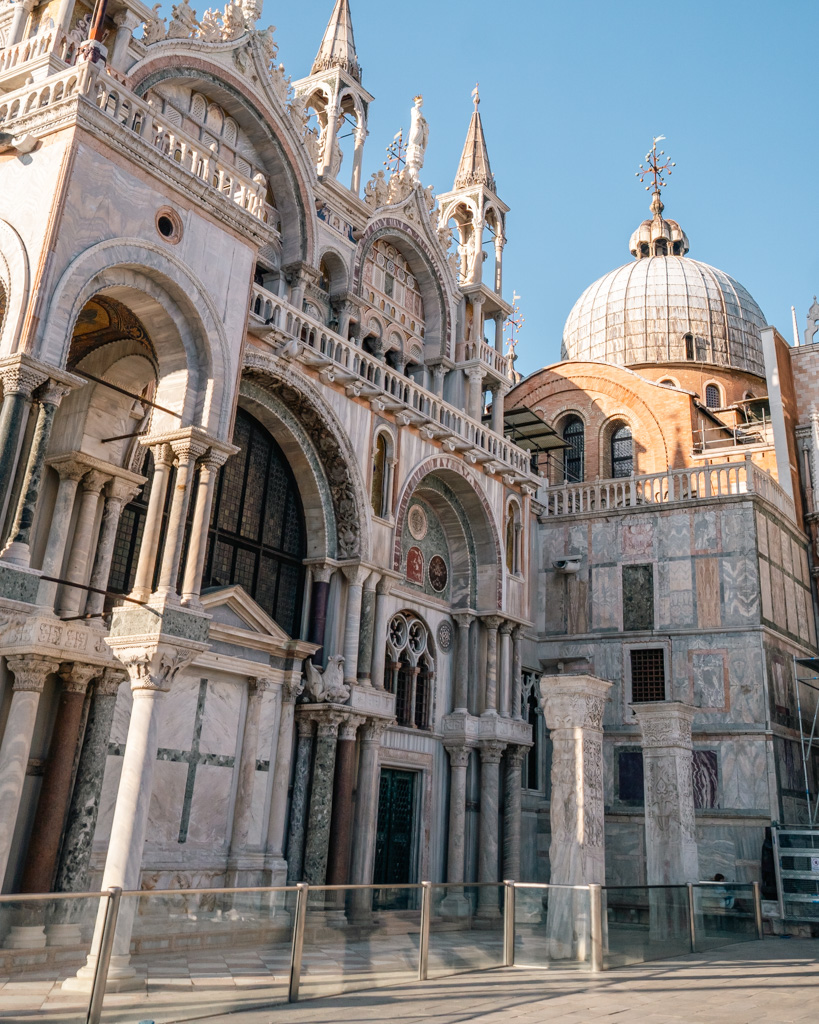
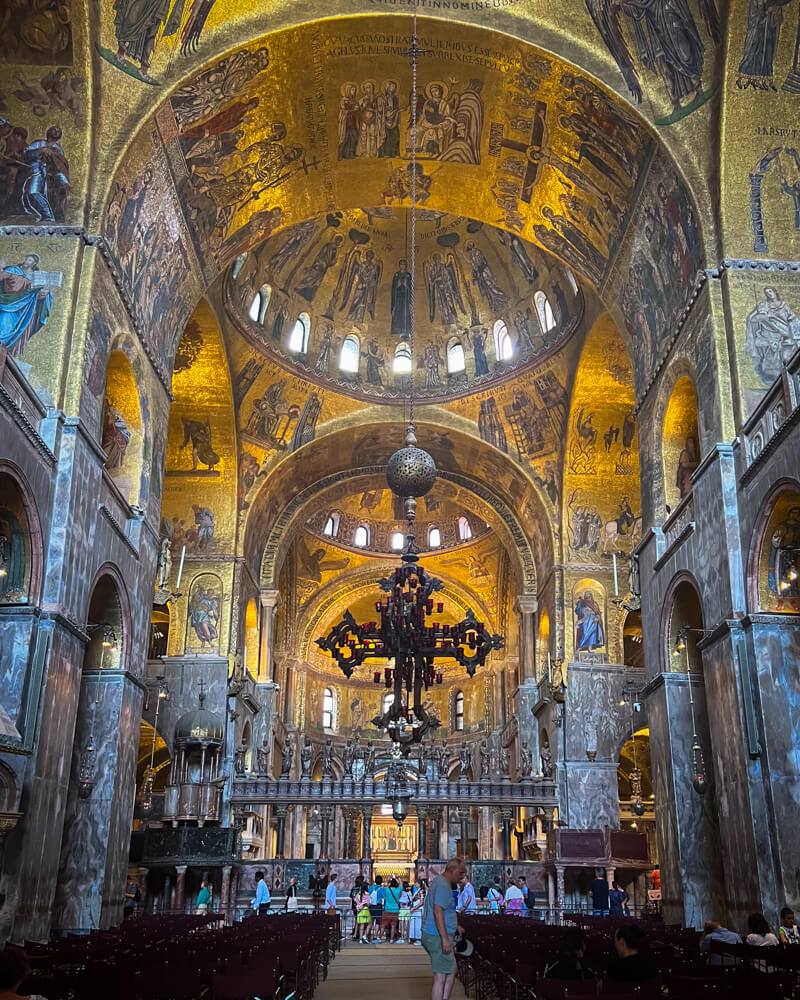
St. Mark’s Square and Basilica: St. Mark’s Basilica is different from other churches in Italy as it has a mix of different styles of architecture—Roman, Greek, French and Byzantine. In fact, the church was largely built from the loot of Constantinople (Istanbul) during Venice’s glory days and will remind you of the Hagia Sophia in Istanbul.
The church is stunning from the outside as well as the inside so I highly recommend going in to explore. Buy a ticket online so you don’t have to stand in line for it. Don’t carry a big backpack and do wear clothes that cover the knees and shoulders; otherwise, you won’t be allowed to go in. Note that entry to the terrace requires an extra fee.
After your visit, take the time to admire this lively square. It is surrounded by the St. Marks Basilica, the Doge’s Palace, the 300-foot bell tower, and government offices that administered Venice’s vast network of trading outposts. I highly recommend doing the Rick Steves Free Audio Walking Tour ‘St. Mark’s Square’ to learn more.
Doge’s Palace: Also known as Palazzo Ducale, the Doge’s Palace is a magnificent Gothic palace that served as the residence of the Doge of Venice and as the seat of government from the 9th century until the fall of the Venetian Republic in 1797. You can buy a skip-the-line ticket to see it’s stunning architecture and impressive art collection. Buy an audio tour on site to learn more about its rich history as well.
Note: You can skip a visit to the Doge’s Palace if you’ve only started exploring the city in the afternoon after settling into your hotel. You will need at least 2-3 hours to see it.
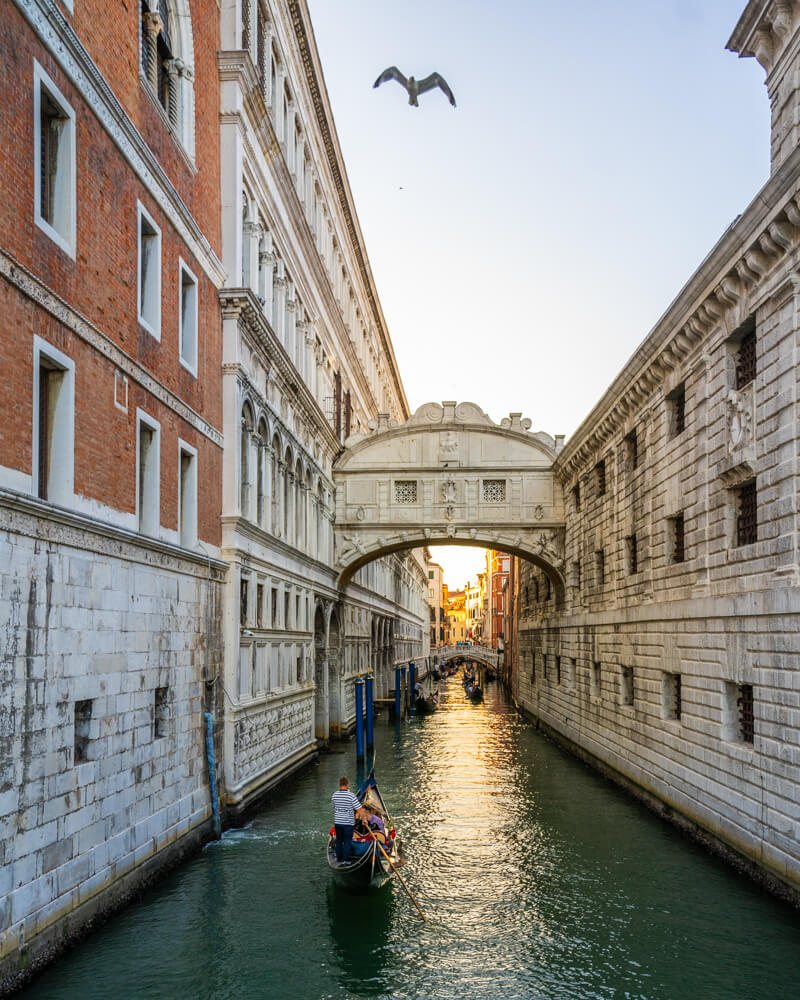
Bridge of Sighs: Head to Ponte della Paglia to see the famous Bridge of Sighs, a limestone bridge that connects the Doge’s Palace with the prison. It is called the bridge of sighs because prisoners would sigh at seeing the beautiful Venice through the bridge’s windows before being executed. If you visit the Doge’s Palace, you can even see it from the inside.
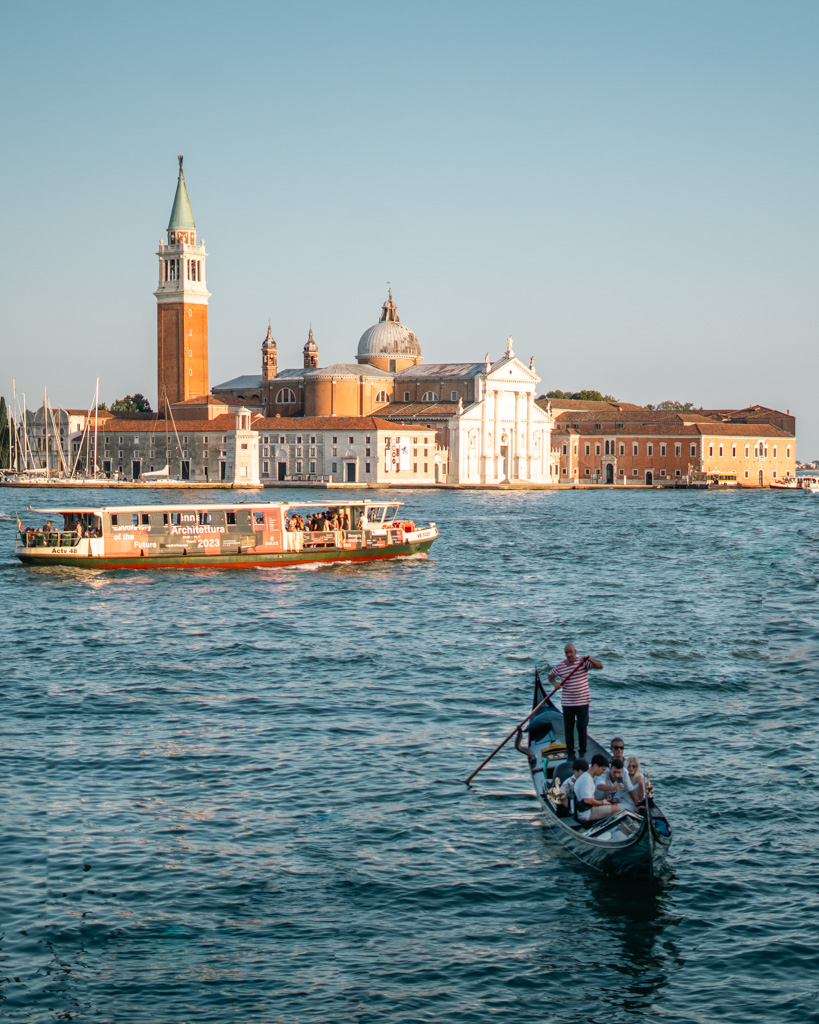
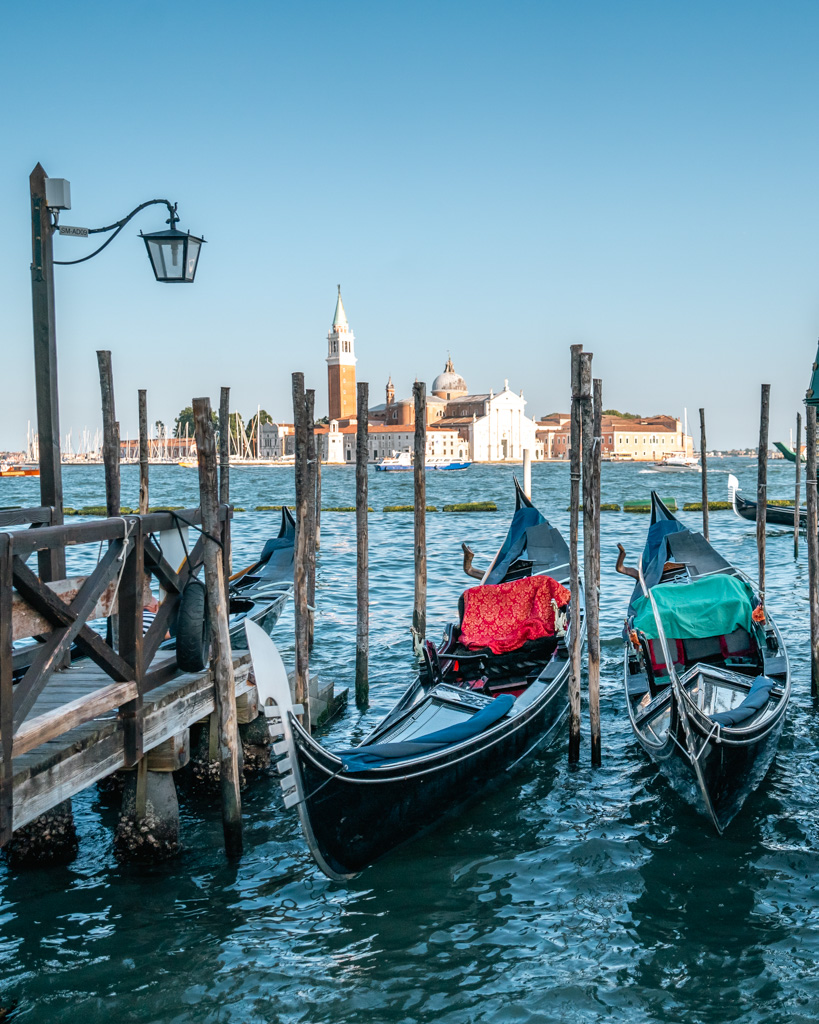
The area around the Bridge of Sighs is really beautiful. We actually just sat by the waterfront and admired the view of the island of San Giorgio Maggiore and all the gondolas passing by.
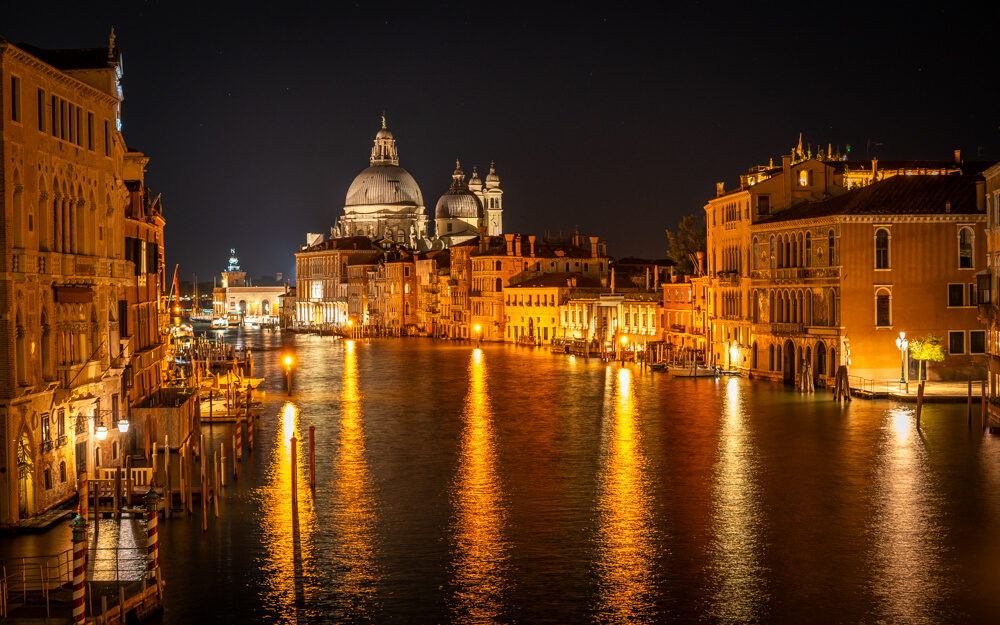
Ponte dell’Accademia: Head to this bridge, from where you get splendid views of the canal! It’ll be amazing to see the views from here at sunset and after dark. On the walk to the bridge, you’ll get to see Venice beyond the main sights and we firmly believe that Venice is best seen on a stroll.
Day 2 in Venice
Half-day trip to Murano and Burano
Start your day by visiting the two cislands near Venice: Murano and Burano. Murano is known for its glass production and Burano for its colourful houses and lace production. Both of these islands are very charming and make for an easy half-day trip. You can do this trip independently by using the ferries or if you’d like someone else to handle the logistics and manage your time for you then take a guided tour.
I would recommend starting your day as early as possible so you’re back for lunch and have enough time to explore more of Venice.
Lunch
Ristorante ai Barbacani: Have lunch here in a romantic setting overlooking the canal. Do prebook the canal window table and be ready to splurge.
Liesurely Walk
This is a 2 km walking route in which you’ll hit some amazing spots in Venice!
1. Liberia Acqua Alta: This is a famous bookshop where entry is free but donations and tips are accepted. You can walk around the bookshop that has books displayed in boats and tubs (their way from protecting books during the floods called Acqua Alta), walk the book staircase, and even take gondola photos for free on the bookshop gondola.
2. Gelateria Gallonetto: While Suso is very popular with tourists, I have to say that Gelatario Gallonetto is where you should go instead. I didn’t understand the hype around gelato until I tried it here. Absolutely dense, flavourful, and divine. You can really tell the difference between ice cream and gelato.
3. Rialto Bridge: Rialto Bridge, a stone bridge lined with shops, is one of the most iconic landmarks in Venice – a must-see on your two days in Venice.
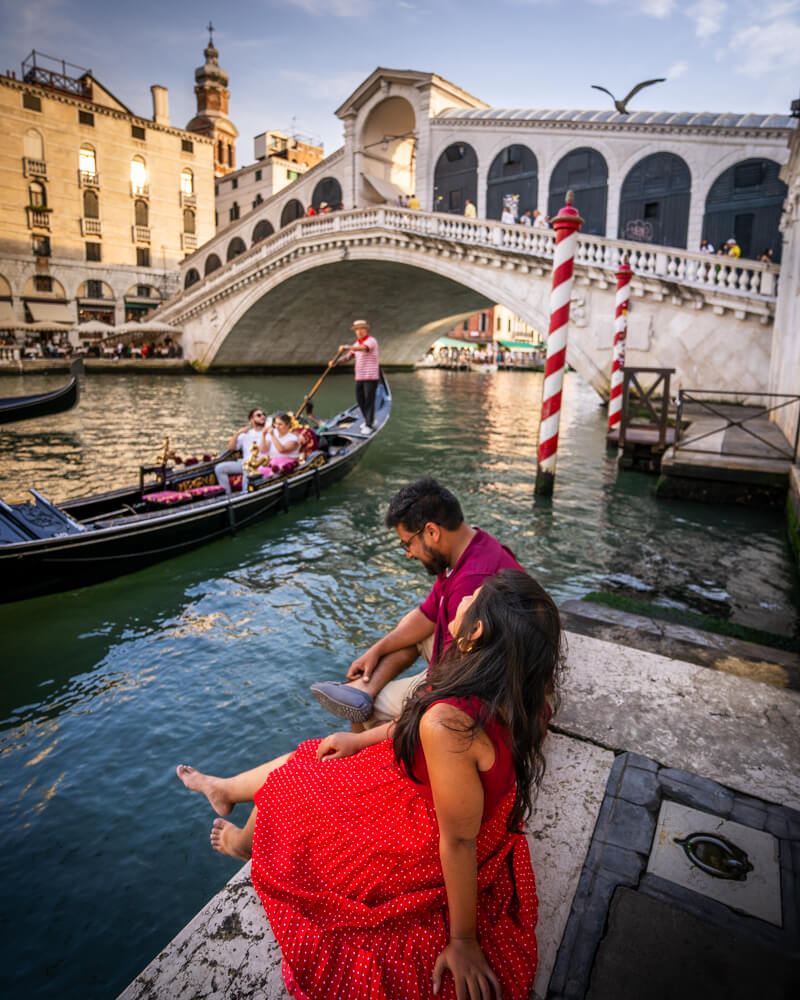
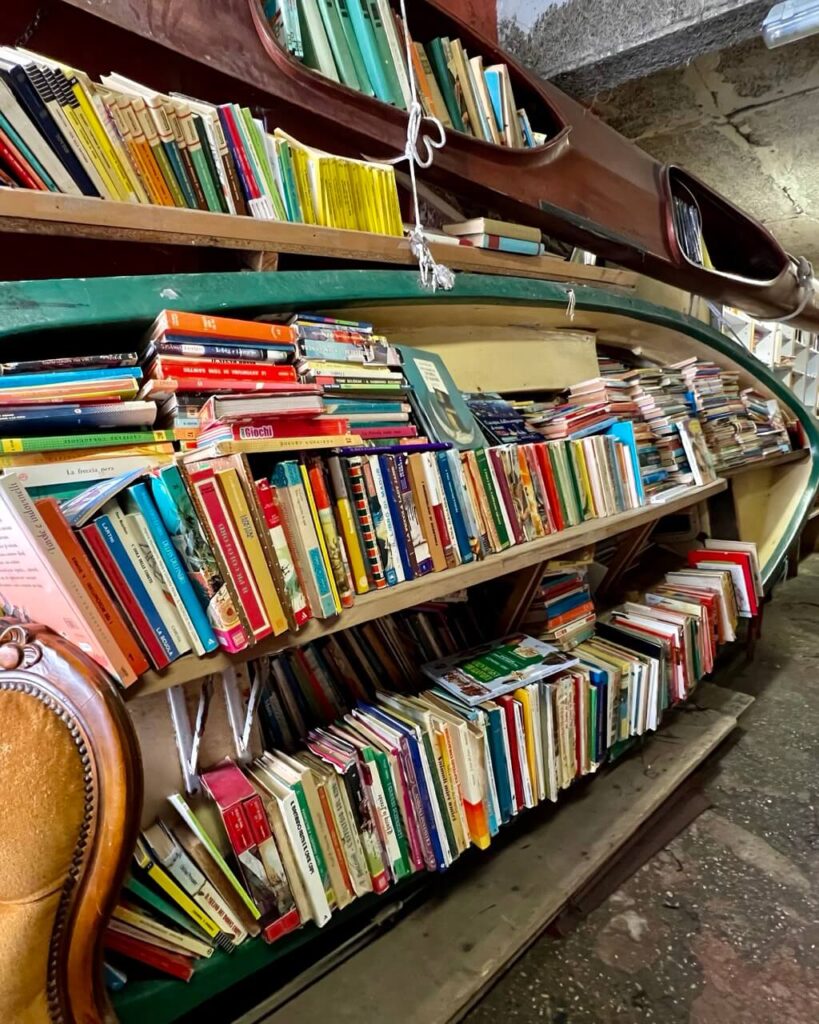
4. T Fondaco Rooftop Terrace: Go to this free rooftop for stunning views over Venice. However, note that you have to prebook a slot on their website; otherwise, you will be turned away.
5. Gondola Ride: A gondola ride is often considered THE best thing to do in Venice (we think it’s way too expensive). You can take a gondola ride from St. Marks Square or even Rialto Bridge. However, I’d recommend not boarding a gondola at these popular spots unless the queue is tiny. Instead, head to Santa Sofia Gondola Station. The Gondola Ride costs €90 for 30 minutes from 9 AM to 7 PM and €110 at night from 7 PM to 3 a.m. It is best to get to the station, pay and do the gondola ride. Remember that the price mentioned is per gondola ride and not per person so it works out great for families.
If you’d like to pre-book a shared gondola ride, then you can do so as well. Just remember that this ride starts near Piazza San Marco so it is best to do this activity the previous evening, or on this day right after lunch before you head to Liberia Acqua Alta.
If you think the Gondola rides are too expensive, then take a “gondola da traghetto,” (gondola ferry) that quickly crosses the Grand Canal. Such crossings are a shared ride that lasts 30 to 40 seconds and costs about €2.

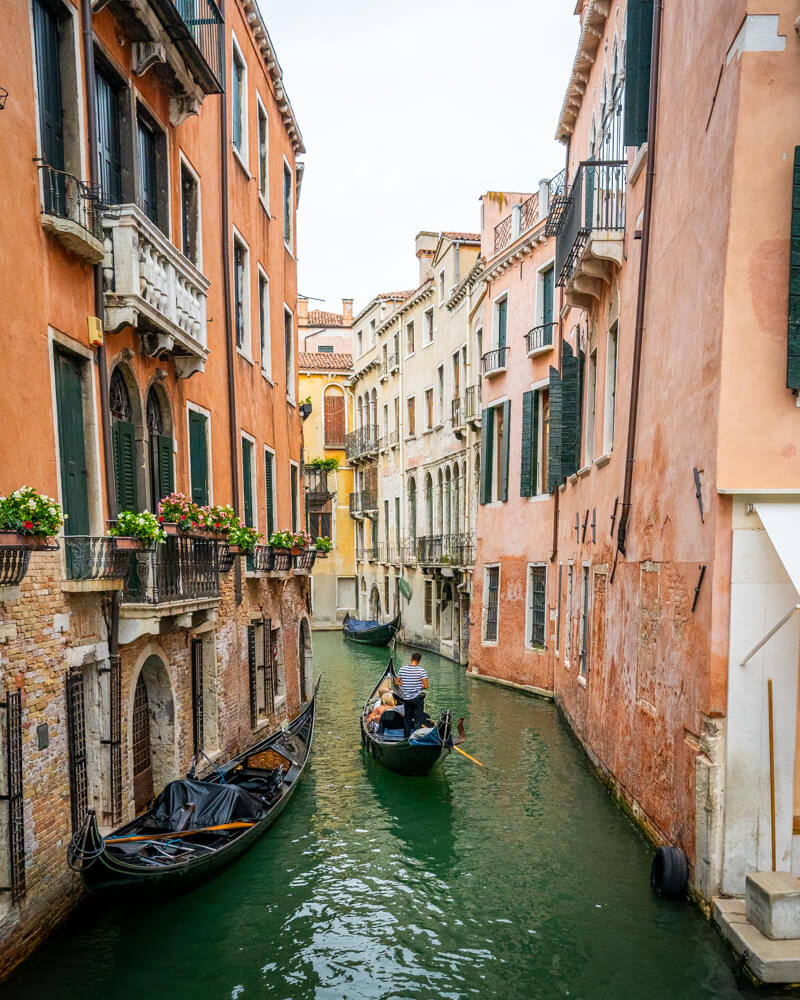
6. Ponte Chiodo: This is one of only two remaining bridges in Venice that does not have a railing on either side. The lack of a railing gives the bridge a rustic and unassuming appearance and makes for an excellent photo spot.
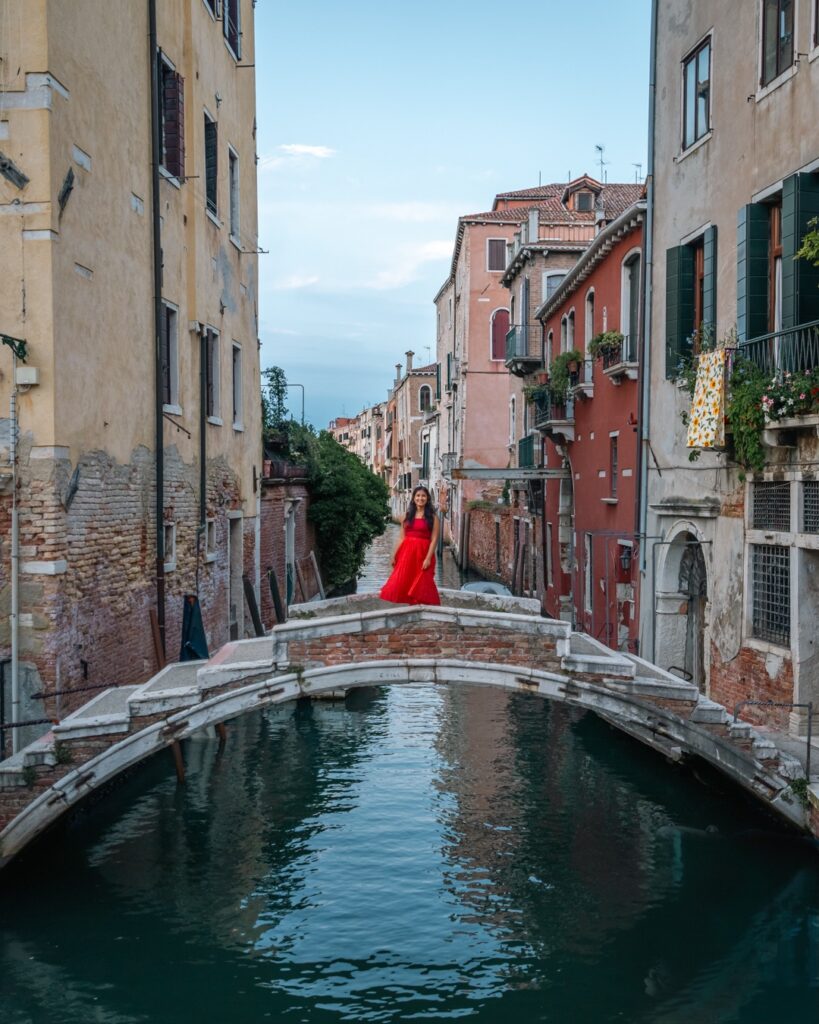
7. Algiubagio: Walk towards the pier near Algiubagio Restaurant to see the sunset colours. You can even see the Dolomites mountains from here and it’s absolutely stunning. You can further choose to have a fancy meal at Algiubagio (make reservations beforehand). This restaurant was once in the Michelin Guide and we loved the food here (skip the tiramisu though).
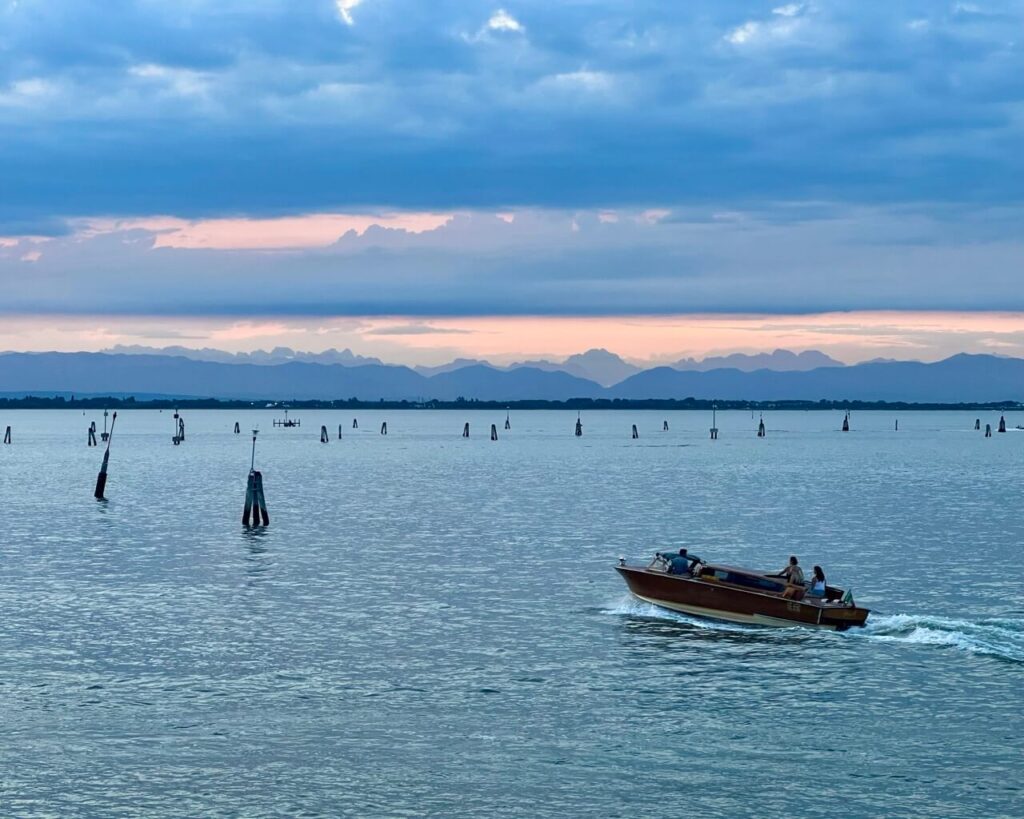
8. San Marco Piazza: At night, head back to San Marco Piazza. The vibe at night is quite different from that in the day so you have to experience it. Don’t forget to check out the duelling orchestras at Cafe Florian and Quadri. Both are super old and prestigious and they have hosted several famous personalities.
Important tips and must-knows
- Google Maps: Using Google Maps for your walks in Venice can be slight challenging. It uses a combination of walk and targhettos to show you the route if you’re going across the Grand Canal. Therefore, it might completely skip the 4 bridges over the canals to show you the shortest route.
If you’d like to take the bridge instead, you will have to enter the name of the bridge you wish to cross, then get to the bridge following Google Maps, then enter the name of your final location and follow the route. For example, we stayed in Dorsoduro so everytime we wanted go our Airbnb from San Marco had to cross Ponte dell’Accademia to get to our Airbnb from San Marco. - Luggage: Venice has a lot of bridges, therefore a lot of steps up and down time and again. If you think that carrying your luggage will be a hassle in such conditions, you can choose to store your luggage somewhere near the train station or bus stop using a service such as Radical Storage, which costs about Euro 2.5 to 5 a day. Then carry only a small backpack to your accommodation meant for your 2 days in Venice, Italy. In fact, you can also do this for other Italian cities.
- Turn of weather: The weather in Venice can change really fast. One moment it’ll be sunny and the next there will be a full-on storm. Even in the summer months. So it’s best to carry an umbrella or raincoat for such times.
- High humidity: I know this might be a strange tip but it happened to us so it might be helpful to some of you. Do not do laundry in Venice unless there is a dryer. Which is not the norm for Italy. The humidity levels are so high that your clothes might not dry even after 2 days.
Other Reads from Italy
3 Days in Rome Itinerary
Florence Itinerary- 2 days
Saturnia Hot Springs in Tuscany
Day Trip from Milan to Lake Como
Cinque Terre in one day
Dolomites 4-day Itinerary
This blog post on ‘What to see in Venice in 2 days’ has affiliate links that enable us to earn a small commission when you make a purchase, with no extra cost to you. We only recommend products and activities we like and those that might interest you. If you like any suggested product, do buy from the given links.