
So you want to go on an Africa safari? I can’t blame you! I’ll never forget the first time I laid eyes on a lioness as she turned her tawny head towards me and I met her orange eyes. Or the time I saw my first leopard, its spotted legs draped over the branch of an acacia tree. Moments like this stay with you for a lifetime.
But with a host of countries across the African continent, it can be challenging to decide where to go on safari in Africa and what the differences are. Trust me, the differences are great and it’s a decision that you don’t want to rush.
My first ever experience in Africa was a canoeing safari in Zambia. And whilst I saw some of the unbelievable scenery (think pink-tinted mountains standing slightly hazy on the horizon behind the mighty Zambezi River) and had plenty of elephant sightings, we didn’t see any predators over the entire 10 days.
So no, not all African safari destinations are the same! Which country and park you choose for your safari can give you a completely different adventure.
The type of safari you choose to go on depends totally on your preferences. In this blog post, I’m going to examine five of the best wildlife safari destinations in Africa, comparing them on key factors listed below that’ll help you decide which is the right park for you.
- Key Factors for Choosing the Perfect African Safari
- Best African Safari Destinations Compared
- Kruger National Park, South Africa – Best for Self-Drive Safaris
- Maasai Mara, Kenya – Best for Accessible Guided Safaris
- Serengeti, Tanzania – Photography and The Wildebeest Migration
- Okavango Delta, Botswana – Best for Luxury Safari and Exclusivity
- Etosha National Park, Namibia – Best for Overlanding Adventures and Desert Wildlife
- Summary – Quick Decision Guide
Key Factors for Choosing the Perfect African Safari
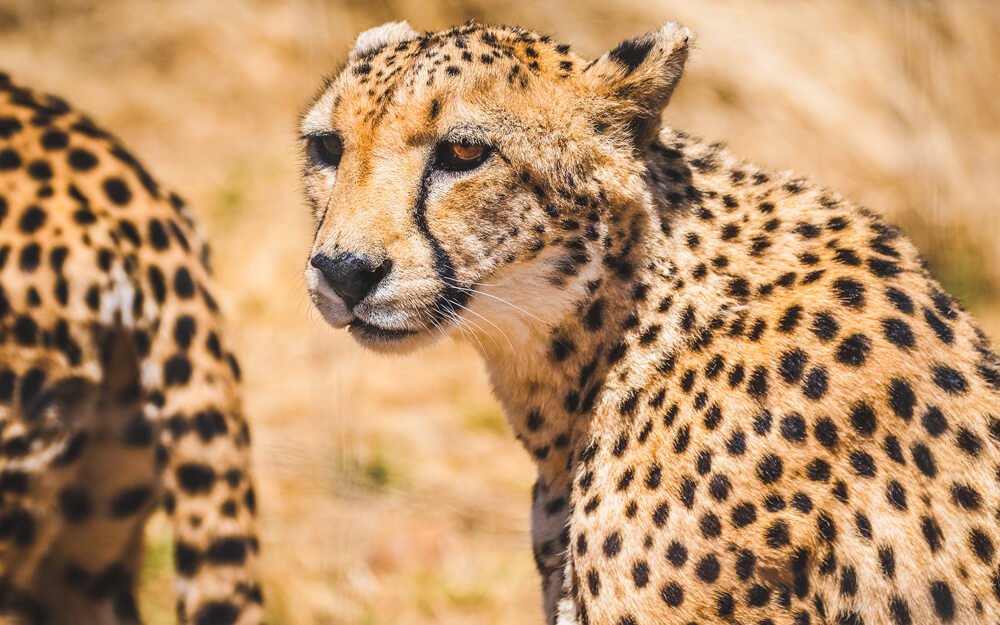
There are so many incredible African safari destinations out there! But which one is best for you comes down to a number of factors:
1. Uniqueness: Each safari park has a different geography and unique aspect which makes a safari all the more interesting
2. Wildlife: Typically, one aspires to see the big 5 (lion, leopard, rhino, elephant and water buffalo); however, these are not present at all parks. So you need to choose a park according to what you want to see. Also some parks may have species you can’t see anywhere else.
3. Cost: Safaris are typically expensive. However, they can also be done inexpensively if you know where to go and how to do it.
4. Season: Not all seasons are equal. Monsoons can be mushy and peak summers/winters uncomfortable. Ideally, the dry season is the time to go, followed by birthing season when you get to see the adorable little ones.
5. Accessibility: Some countries and parks are tougher to get to than others, requiring multiple flights or long drive times.
6. Exclusivity: Some safari destinations allow a limited number of guests or have higher costs, making the experience available to only a select few.
7. Self-drive vs. guided safari: Yes, it is possible to do self-drive safaris in Africa. Some of these are in 4x4s and guided and some are regular cars and unguided.
Now let’s take a closer look at these factors across 5 of the most iconic locations to help you plan your perfect African safari!
Best African Safari Destinations Compared
Kruger National Park, South Africa – Best for Self-Drive Safaris
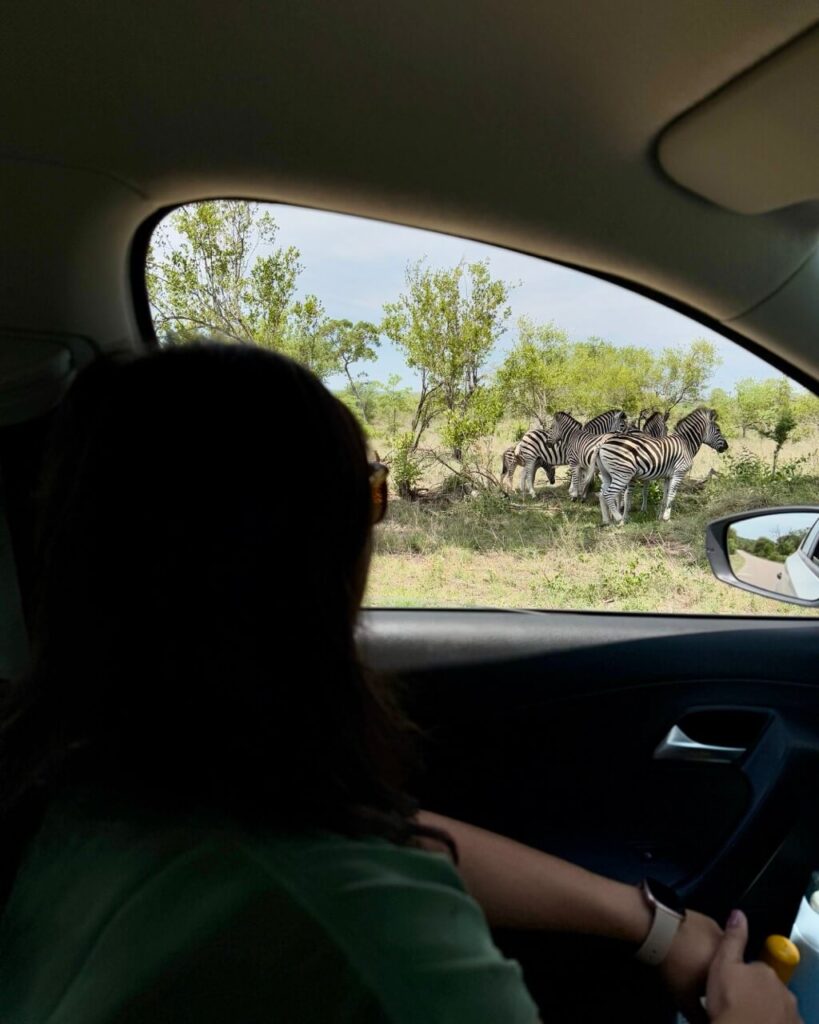
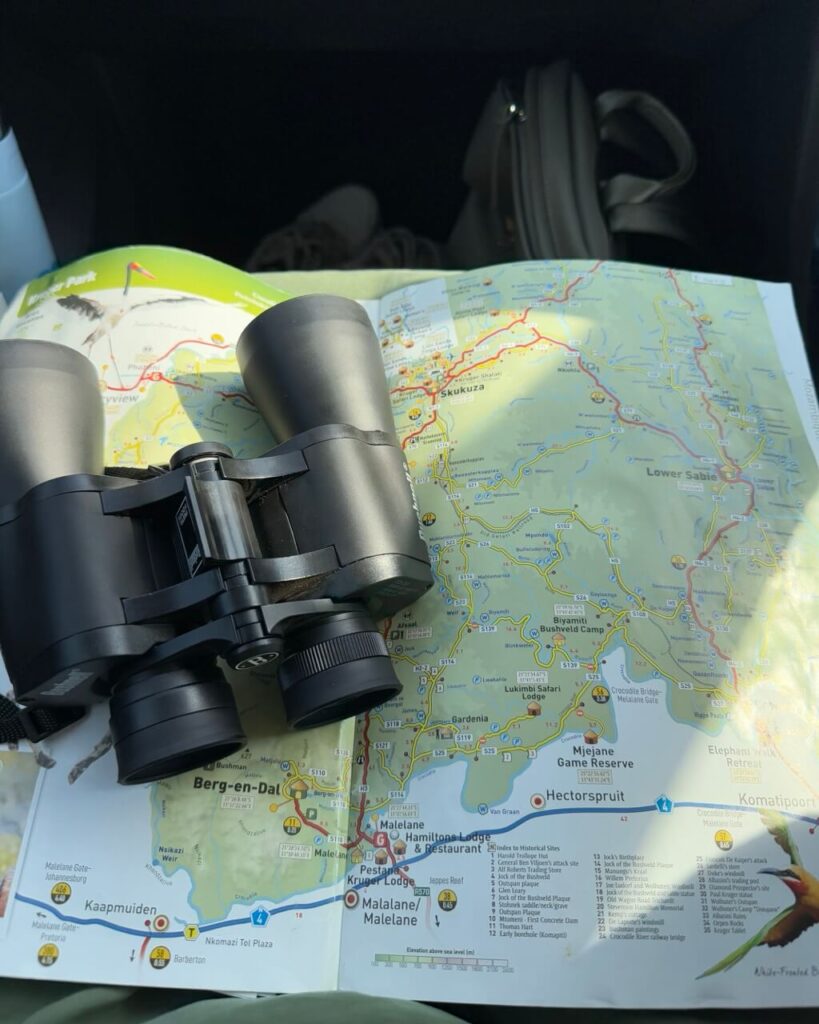
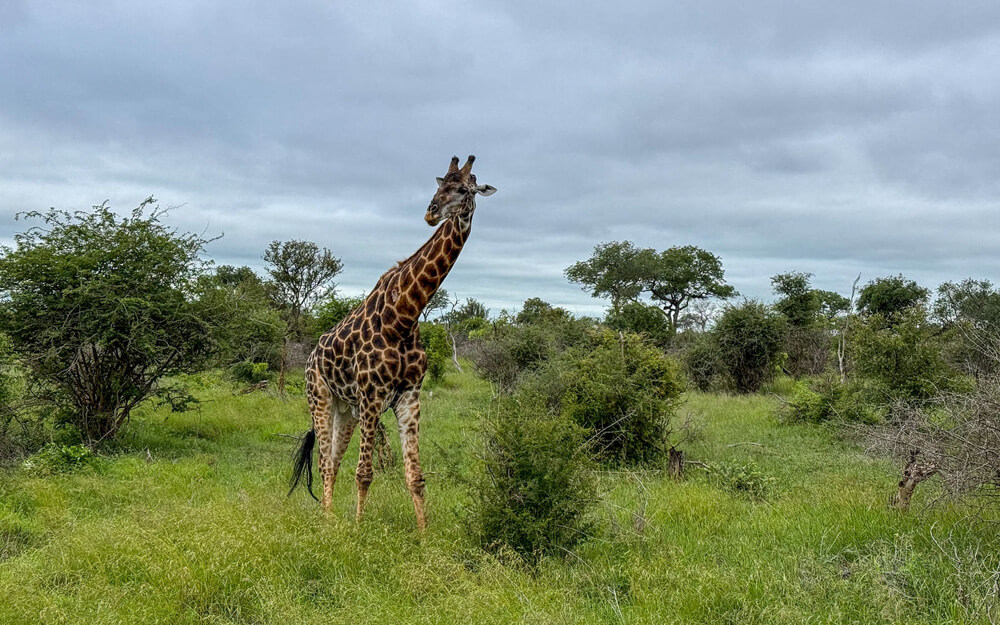
Kruger National Park in South Africa is without a doubt one of the most famous African safari destinations. It is one of the five largest national parks across the whole of Africa. Its expansive size means that it hosts a range of habitats and species. It is the only safari location I’ve been to that has a well-maintained network of tarred roads throughout the park, which makes it extremely easy to get around.
What sets it apart
Unlike most national parks, it’s possible to enjoy a safari here without a guide and yet see the big 5. Since Kruger has tarred roads, you can simply rent a regular car and drive around on your own, without getting lost. It is an absolutely thrilling experience, especially for those who like to do things at their own pace and time.
Wildlife
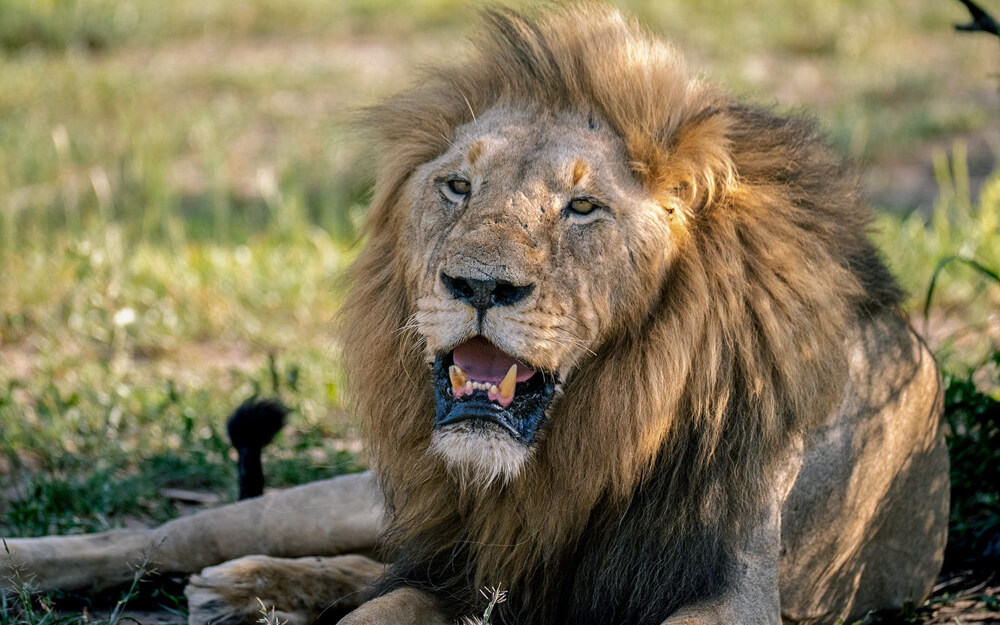
Kruger harbours 147 mammal species, over 30,000 elephants and more than 370 African wild dogs. You can find all of the Big Five here (lion, leopard, rhino, elephant and buffalo), and sightings of each are relatively frequent. Kruger also has a healthy population of cheetahs, hyenas and a range of fantastic birdlife.
Best time to visit
The dry season (May-October) is best for game viewing, as vegetation is sparser and water scarcity draws animals to water sources. The low malaria risk between June and August is another plus. The only caveat here is that this is also the busiest time to visit.
Cost range
Kruger is the cheapest of all five destinations in this guide, costing from $200 per person per day thanks to its budget-friendly SANParks rest camps and the option to self-drive and skip guide costs.
Prices at the private reserves in Greater Kruger (private reserves adjacent to the park) are markedly higher, starting at $500 per person per day for mid-range and $800 to $2500 for luxury lodges (including meals, drinks and two daily game drives).
Self-drive vs. guided
Kruger is the perfect place for a self-drive safari. You can simply rent a hatchback car and be out on the tarred roads. There are even rest camps (cafes, toilets, and accommodation) within the park to make your self-drive comfortable. To aid your big 5 spotting, reports of recent sightings can be checked on sightings boards; you can join public Whatsapp groups and other drivers are often keen to tip you off.
However, if you do not want to drive, you can just as easily do a guided safari in either government-operated 21-seat vehicles or smaller 9-seater safari cars arranged by your hotel. While there is no exclusive radio network that guides us to communicate sightings, the drivers do speak to each other to make you see as many animals as possible as well as provide you with knowledge about them.
Accessibility
Just a short internal flight to Skukuza or a 5-hour drive from Johannesburg, Kruger is among Africa’s more accessible safari destinations. However, the downside is that this also means large crowds, with vehicles often queuing at some sightings.
Exclusivity
If you want to benefit from Kruger’s excellent location and wildlife but beat the crowds, choose to stay at one of the lodges in the Greater Kruger private reserves. These are only open to lodge guests and limit vehicles to 2-3 per sighting, ensuring an intimate experience. Sabi Sands is especially known for its concentration of big cats.
What else to do
Kruger National Park is best combined with Cape Town, the Winelands, and the Garden Route: the classic South Africa loop! So you can experience safaris, beaches, mountains vinyards, and cities all in one trip.
Maasai Mara, Kenya – Best for Accessible Guided Safaris
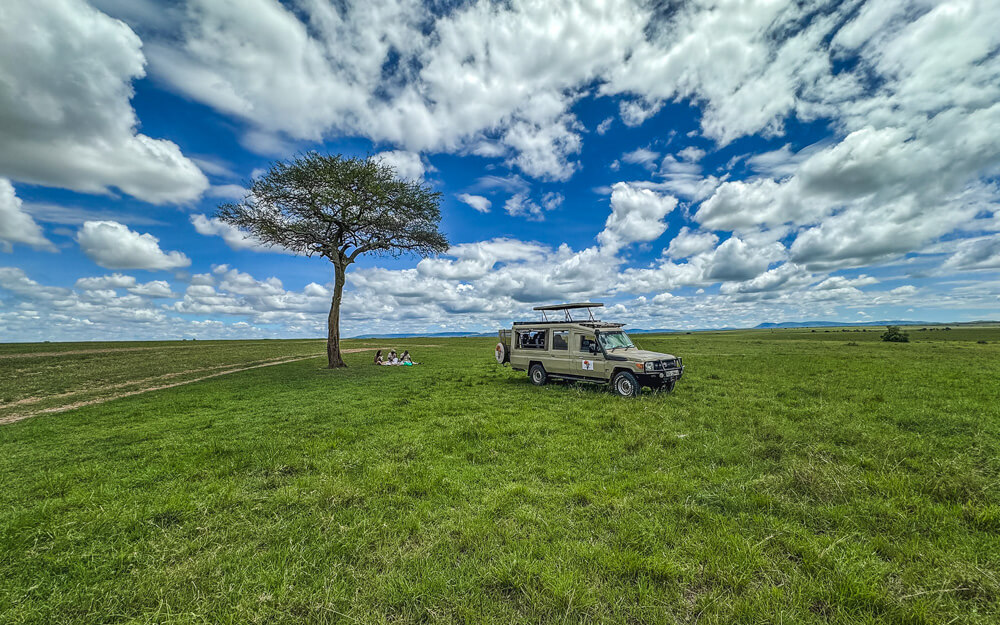
The Maasai Mara is renowned for its sprawling plains, dotted with the occasional acacia tree. When you imagine a classic safari, this endless landscape is likely what springs to mind. In addition to that, it is highly accessible and safaris are available at favourable price points, making it the best African safari for first-timers.
What sets it apart
Other than the wide, open landscape, which, combined with the Serengeti, is unlike anywhere else on the planet, the Maasai Mara’s most unique feature is its part in the great wildebeest migration.
The great wildebeest migration is the second-largest land mammal migration on the planet and sees several million wildebeest as well as hundreds of thousands of zebras and gazelles make the year-long journey from the Serengeti’s southern plains all the way up to the Maasai Mara and back again. The migration spends mid-July to mid-October in the Maasai Mara each year.
The most iconic part of the migration is the river crossings but even without these crossings, seeing millions of wildebeests dotting the plains is something to behold. This spectacle is often the highlight of people’s Kenya safaris.
Wildlife
That being said, the Maasai Mara is so much more than the great wildebeest migration!
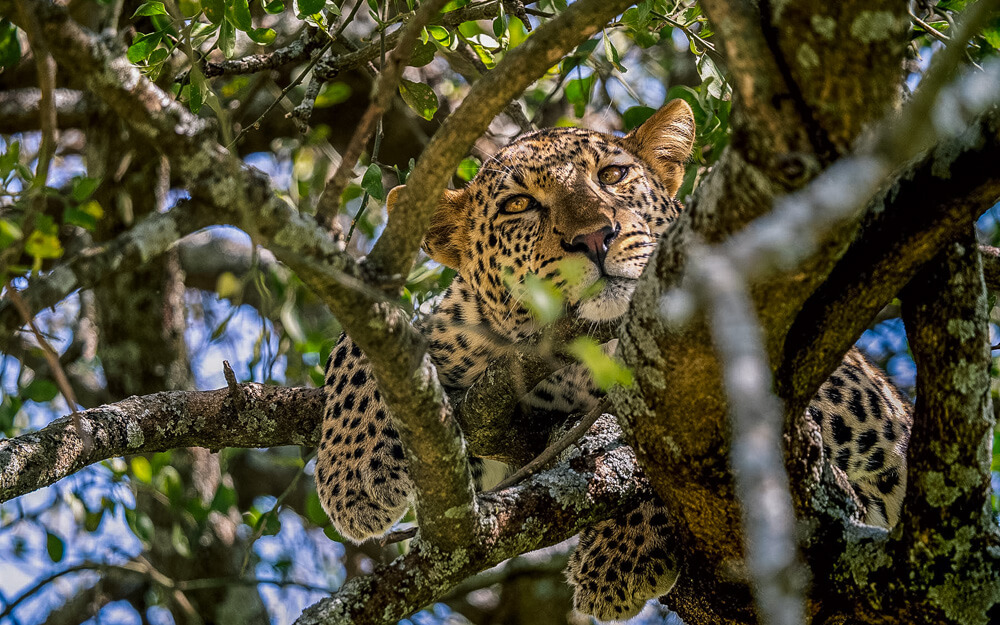
Predator populations here are exceptional, with a lion density of 16.5 per 100 square kilometres and thriving leopard and cheetah populations to boot. It’s one of the best places in the world to see cheetahs.
All of the Big Five call the Maasai Mara home, although the black rhino is by far the hardest to see. Still, you can enjoy some spectacular sightings of them if you’re lucky. I’ve been fortunate enough to see black rhinos on two separate visits to the Maasai Mara.
Best time to visit
The long dry season (June to mid-October) is the best time to go, with warm, sunny weather and animals congregating at waterholes. This period largely coincides with the great wildebeest migration. Of this period, I prefer to visit in September, as it’s quieter and crossings are still pretty frequent.
Cost range
Kenya is the cheapest of East Africa’s main safari destinations, with private guided safaris costing about $300 per person per day. Kenya has a wide range of accommodation options available, from basic ground camping all the way up to ultra-luxury lodges and everything in between.
Self-drive vs guided
Regulations on self-driving have got pretty tough in recent years. You can now only self-drive in the Maasai Mara in a compliant 4×4, which has to meet quite strict criteria. Hiring a vehicle like this isn’t actually that different in price to going on a guided safari; therefore, I don’t personally see self-driving as worth it.
Local tour operators cost from $300 per person per day. Safaris include all accommodation, park fees, meals, the vehicle and driver, as well as fuel. Having an expert guide with you can really elevate your experience in the Maasai Mara, as not only are they skilled at spotting wildlife, but they also make use of an extensive radio network and so have access to live sightings.
Accessibility
Situated a six-hour drive or a short flight from Nairobi, the Maasai Mara is among the most accessible premier African safari destinations. Nairobi houses one of the busiest and well-connected airports on the continent, seeing daily flights from London, Amsterdam, Dubai, Doha and more.
Being so accessible and well known, it’s fair to say that the Maasai Mara IS NOT the most exclusive safari destination. However, the recent park fee increase, which more than doubled the cost to enter the reserve, has decreased the number of annual visitors quite significantly.
Exclusivity
For a more exclusive experience, consider staying in one of the neighbouring private conservancies such as Mara North, where vehicle numbers are strictly limited. Only those staying within the conservancy are permitted to traverse here and there are a very limited number of lodges.
What else to do
There are so many incredible safari destinations across Kenya. Allow yourself 7-10 days to combine the Maasai Mara with Amboseli National Park (famous for its huge elephant herds) and Lake Naivasha (great for boating safaris), and add Diani Beach for some relaxation at the end of your safari if you like.
Serengeti, Tanzania – Photography and The Wildebeest Migration
Deriving its name from the Maasai word “Siringet” (“endless plain”), the Serengeti is Tanzania’s second-largest park and a UNESCO World Heritage site. It sits just below Kenya’s Maasai Mara, making them part of the same ecosystem. And whilst they do have some similarities, both boasting rolling grasslands for as far as the eye can see, they offer strikingly different experiences.
The Serengeti is over 8 times the size of the Maasai Mara, allowing vehicles to spread out more and enabling you to see a variety of habitats and landscapes. It is perfect for photography with its mostly flat landscapes and dramatic sunrises and sunsets.
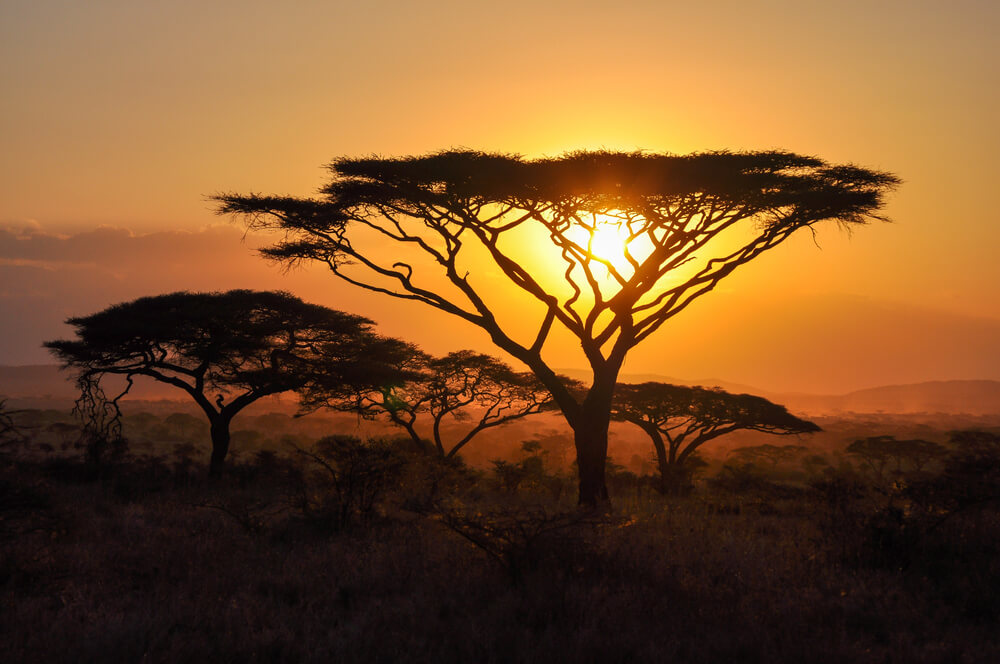
Stunning sunsets in Tanazania (Photo: DepositPhotos)
What sets it apart
The Serengeti has an iconic habitat type which are rocky outcrops known as ‘kopjes‘. These are popular sunbathing spots for a host of animals, including lions, allowing for some unique photography opportunities.
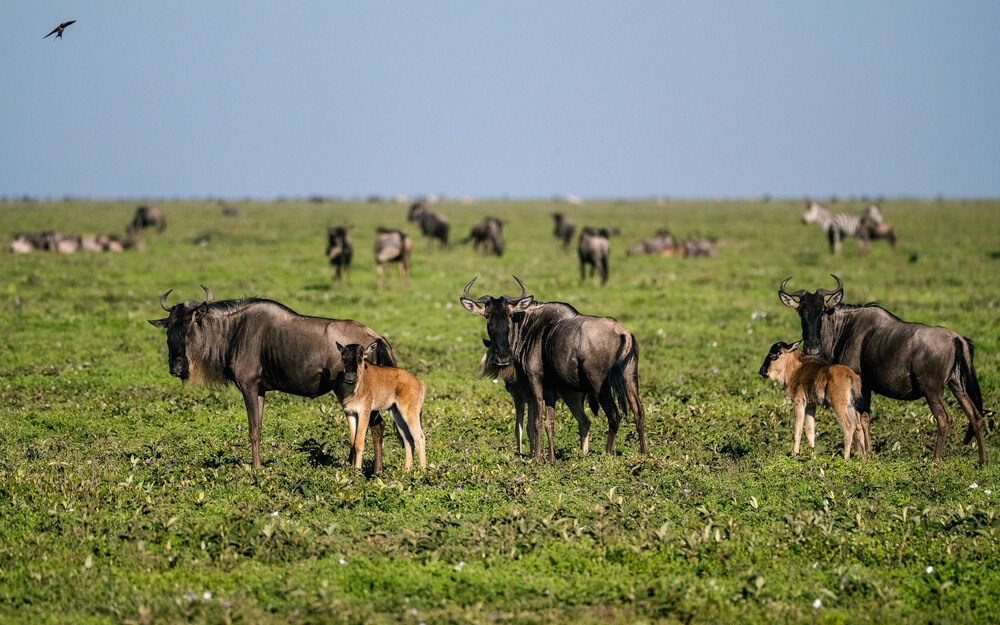
Also, it’s the only place you can see stages of the great wildebeest migration all year round, including calving in the Ndutu Plains. The wildebeest calving is a sight to behold, with up to 8,000 baby wildebeests being born each day.
In addition to the Mara River Crossing, the Serengeti hosts a second river crossing known as the Grumeti River Crossing, which is just as dramatic as the Mara Crossing but has around half the visitors, making it ideal for those who want to see the spectacle without the huge crowds.
Wildlife
In addition to hosting millions of wildebeests year round, the Serengeti is also renowned for its high densities of big cats. Tanzania has the highest population of cheetahs in the world, making it the best place to try to see this endangered big cat.
While the Serengeti is home to all of the Big Five, rhinos can be elusive. I have in fact yet to see one in the Serengeti.
Best time to visit
Most visitors travel to the Serengeti during the long dry season (June to mid-October) to catch the Mara River crossings. The short dry season (December to February) is also popular, as it includes the wildebeest calving season.
Cost range
The cost of a private guided safari in Tanzania starts from $350 per person per day, making it slightly more expensive than Kenya but still reasonable for this type of safari. A reason for the slight cost increase is that the vastness of the Serengeti means that you have to base yourself within the park itself, which comes with additional conservation fees and logistical challenges for the lodges.
However, the increase in cost is in my opinion a small price to pay in order to wake up surrounded by rolling hills and grazing zebras. There are few things more exciting than listening to lions roar as you sleep!
Self-drive vs guided
Most vehicles, including standard 4×4 vehicles, are banned from the Serengeti, forcing self-drivers to rent pricier safari-spec Land Cruisers and thus making self-drive safaris similar in price to fully guided private safaris. The roads in the Serengeti are also not in the best condition. Punctures and other mechanical failures as a result of the rough terrain are extremely common and so self-drivers have to be prepared to contend with these issues.
A private guided safari is really the best way to experience the Serengeti. Having everything taken care of and having an excellent pair of eyes for wildlife spotting really does allow for the most rewarding safari experience.
Accessibility
The closest international airport to Serengeti is Kilimanjaro International Airport, just outside the city of Arusha. There aren’t as many flight options as there are to Nairobi or Johannesburg, making northern Tanzania slightly less accessible. KLM (from Amsterdam) and Qatar Airways (from Doha) are the main flight options.
Serengeti is around an 8-hour drive from Arusha. You can instead opt for a flight which takes just 1 hour. Most visitors combine Serengeti with other nearby safari locations such as Ngorongoro Crater and Tarangire National Park, decreasing the drive time by adding these as stops on the way.
Exclusivity
The Serengeti’s vast size makes it slightly more exclusive than the Maasai Mara. Most visitors to the Serengeti follow the migration so if you want a more exclusive experience, base yourself in a part of the park that’s away from the migration. Whilst the wildebeests may migrate, other animals like big cats and elephants don’t, so there’s always plenty to see.
What else to do
Serengeti is located close to a number of incredible national parks and conservation areas in northern Tanzania, such as Ngorongoro Crater and Tarangire National Park. It’s easy to combine them into an exciting safari circuit. For a relaxing end to your trip, finish with a few days on the beaches in Zanzibar. You can fly straight to Zanzibar from Serengeti.
Okavango Delta, Botswana – Best for Luxury Safari and Exclusivity
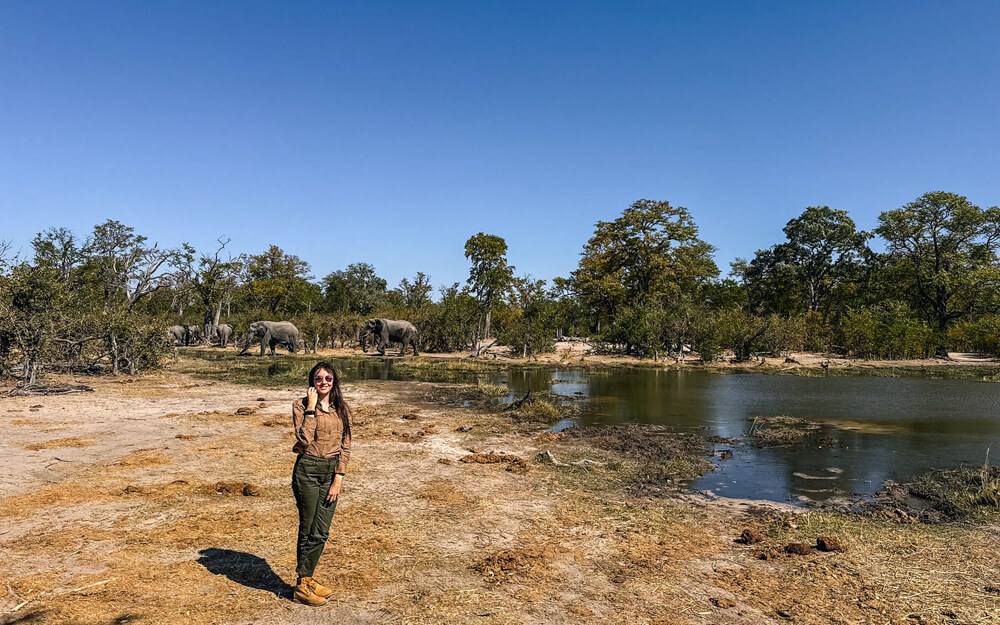
The Okavango Delta in Botswana is a unique safari experience. It is the world’s largest inland delta and its series of crystal-clear waterways are unlike anything you’ll find elsewhere on the continent.
This part of Africa is remote and with just a small number of luxury lodges dotted throughout the vast wilderness, it’s also extremely exclusive. Some of these lodges are only accessible via small propeller planes or helicopters.
What sets it apart
Botswana’s vast Okavango Delta is utterly unique, with counter-seasonal floods transforming the Kalahari into a labyrinth of waterways, islands and floodplains. While some sections are navigable by safari vehicle, others can only be explored in canoes (mokoros), gliding smoothly past wading elephants and wallowing hippos.
The country operates with a high-value, low-impact tourism model. Each tourist has to pay a premium which helps to conserve the wilderness and give back to local communities. This tourism model helps to keep the wilderness pristine and game drives quiet. It does, however, mean that safaris in the Okavango Delta do not come cheap.
Wildlife
The Okavango Delta is technically home to all of the Big Five. Four of these impressive animals are frequently seen throughout the county. Rhinos however are extremely rare and are restricted to some secluded islands in the Okavango Delta. The east of the Okavango Delta is part of the stage of Africa’s longest overland migration, the great zebra migration, which sees tens of thousands of zebras journey over 1,000 kilometres each year.
Best time to visit
Peak season is from July to mid-October, when conditions are driest and wildlife congregate at water sources. The Okavango Delta floods from mid-June each year for a couple of months. This is a great time to visit if you want to experience the magic of the delta and take to the waterways via a traditional mokoro.
Cost range
Botswana is the most expensive safari destination in Africa. Safaris start from $450 per person per day for mobile camping safaris. This type of safari involves travelling to a number of wilderness campsites and having a team pitch up camp for you. It’s non-participatory so you don’t have to spend time erecting and dismantling camp, meaning you can focus entirely on game drives.
Mobile camping isn’t camping in a traditional sense, as tents are spacious and house comfortable beds as well as other pieces of furniture like bedside tables. They also have ensuite bathrooms, although they are not plumbed in. Showers are bucket showers and toilets are often long-drop, but they do also have actual toilets!
If you want to stay in an actual lodge within the national parks, you’re looking at at least $1,000 per person per night. There are a limited number of lodges within the wildlife areas and the remote location of these lodges means they are expensive to run. The cost therefore reflects both the exclusivity and logistical challenges of being in such a remote area.
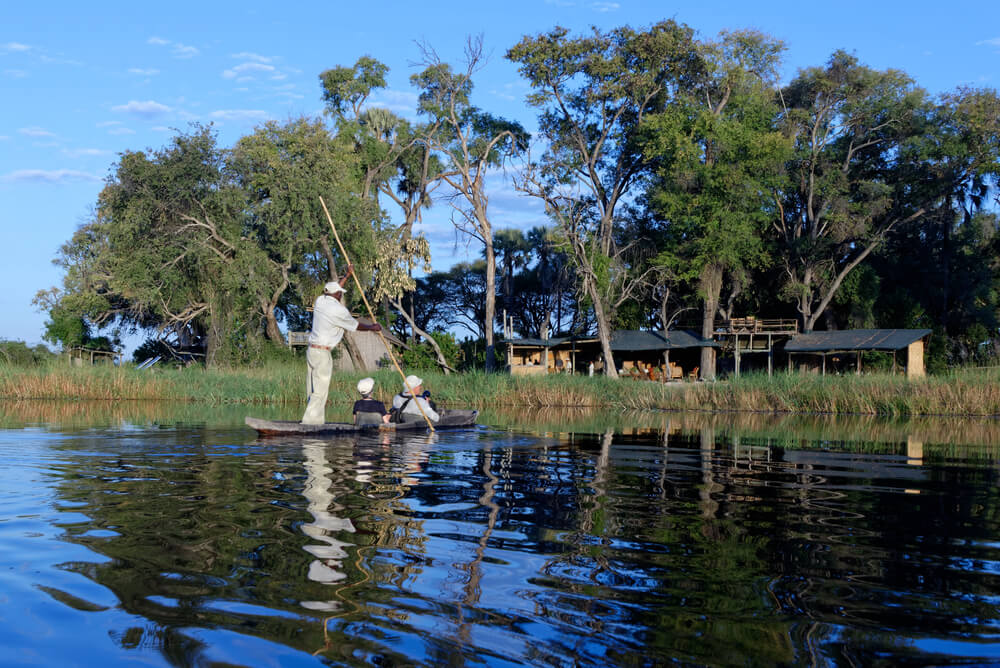
Tourists on a safari in a tradition mokoro canoe (Photo: DepositPhotos)
Self-drive vs guided
Botswana is popular with self-drivers. However, it’s not a destination for novices. Much of the Okavango Delta is covered with water, especially during the green season. River crossings are common and they’re not for the faint-hearted. No one wants to get stuck in a crocodile-infested river!
Booking a guided safari will make your experience much more relaxing. Your guide will know the area incredibly well and thus know the best crossing spots, keeping you out of any hairy situations.
Additionally, wildlife sightings are much more abundant when in the company of an expert guide. On my visit to Botswana, I spoke to a couple who had been self-driving for a month. Despite countless game drives, they hadn’t seen a single leopard or African wild dog. In contrast, over a 10 day period, I had seen 3 leopards and had 3 sightings of African wild dogs, all thanks to my knowledgeable guide.
Accessibility
Botswana has always been a challenging country to reach. However, it is becoming more and more accessible. Traditionally you could only fly from Johannesburg or Cape Town in South Africa, and so typically you’d often need at least three flights to get here from Europe or America. However, Ethiopian Airlines has recently opened up flights to Maun, meaning you can get to Botswana in two stops.
Botswana’s northern safari circuit is relatively accessible. Moremi Game Reserve (in the Okavango Delta) is a 5-hour drive north from Maun and is just 4 hours from Khwai (also in the Okavango Delta), which is 4 hours from the centre of Chobe National Park.
Each location is also linked via scheduled flights.
Exclusivity
In terms of exclusivity, it can’t get more exclusive than Botswana for safaris. Much of the Okavango Delta is divided into a number of private concessions, each with just a handful of luxury lodges. Most of these concessions can only be accessed via plane or helicopter. The lodges themselves are small, with just a handful of rooms. This all allows for a serene safari experience where you’ll encounter hardly any other vehicles.
What else to do
Travellers usually combine Moremi and Khwai with Chobe National Park. I’d recommend a Chobe Riverfront boat cruise for close-up elephant, hippo and Nile crocodile sightings. You can also visit Victoria Falls – one of the world’s largest and most spectacular waterfalls. Victoria Falls is just 1 hour away from Kasane town in northeastern Botswana.
Etosha National Park, Namibia – Best for Overlanding Adventures and Desert Wildlife
Etosha National Park is located in northern Namibia. Centred around a huge salt pan (essentially a desert), Etosha is a safari park like no other. At 22,000 square kilometres, Etosha is larger than Kruger and considerably larger than the Maasai Mara.
It’s also one of the few major safari destinations you can navigate in your own rental car, allowing significant cost savings. Namibia is quite frankly an overlanders dream and Etosha National Park is just one of a number of adventurous stops that you can enjoy as you road-trip round this desert country.
What sets it apart
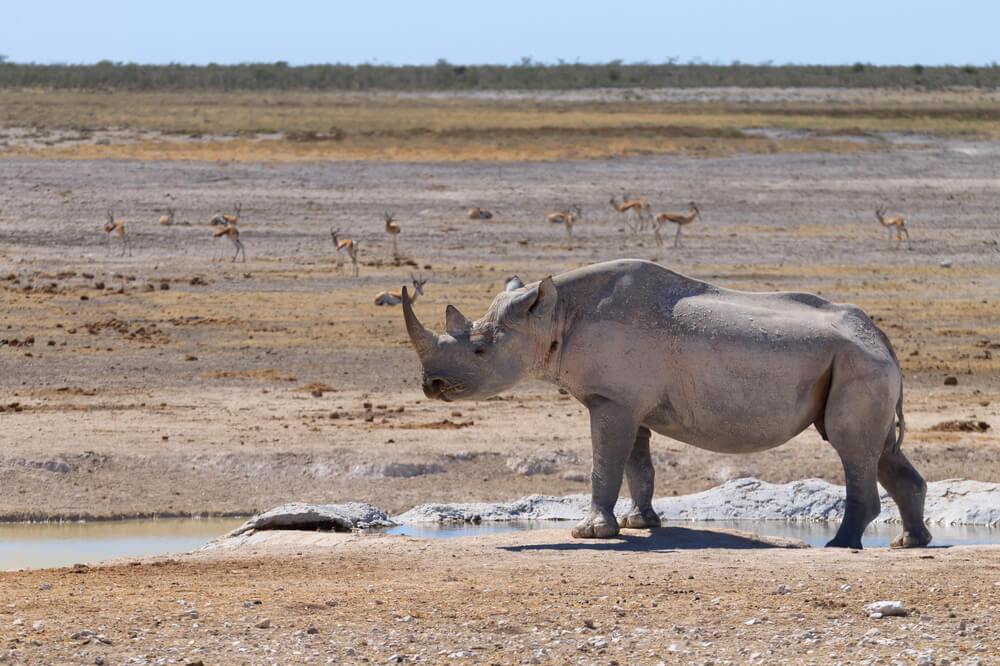
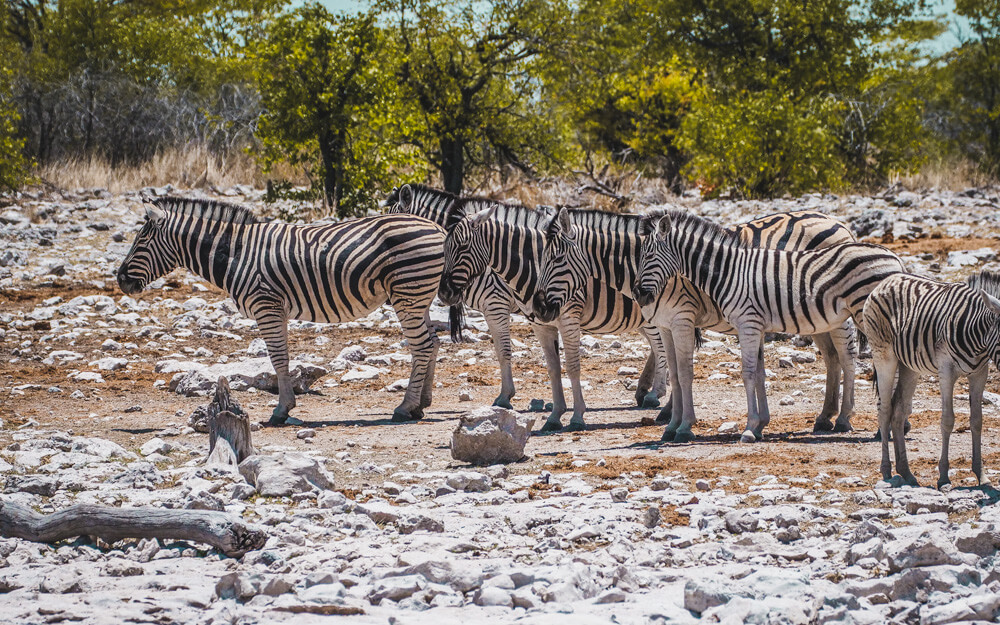
Unlike Kenya and Tanzania, Etosha has desert and scrubland terrain, which itself makes for a unique African safari experience. It’s a chalky white expanse that melts into a hazy mirage on the horizon. This dry desert environment attracts a number of desert-adapted wildlife species that you are unlikely to see in any other parks on this list, such as oryx and springbok.
This type of terrain encourages wildlife to gather at the park’s waterholes, which makes wildlife viewing easier and some of these waterholes are floodlit (Okaukuejo, Halali and Namutoni), which makes them excellent for nocturnal wildlife viewing.
Wildlife
Some 114 mammal and 340 bird species call Etosha home! You can find four of the Big Five: lions, leopards, elephants and rhinos. While the Cape buffalo is entirely absent because of the climate, Etosha is one of the best places on this list to see black rhinos. They can often be found at one of the many floodlit watering holes.
Etosha not only houses the world’s largest population of south-western black rhinos but also boasts over 1,500 endemic black-faced impalas. Black-faced impalas are quite rare and you might not be able to see them anywhere else.
Best time to visit
The best time to visit Etosha is during the dry season (May-October) with cool days and cold nights, when wildlife congregates around the park’s permanent waterholes. For adorable babies, migratory bird species and green landscapes, plan to visit between November and April.
Cost range
The most budget-friendly way to see Etosha National Park is on a self-drive safari. This costs around $200 per person per day, including vehicle rental, self-catering accommodation, fuel, park fees and food.
Guided safaris cost upwards of $400 per person per day and can reach over $1,000 per person per day if you opt to stay in luxurious accommodation.
Self-drive vs guided
Along with Botswana and South Africa, Namibia is one of the few African countries where self-drive is a practical cost-saving option. Well-maintained roads, clearly identified waterholes and fenced rest camps, make self-driving more manageable here than in most other African parks.
And in any case, you will probably have a rental car to explore the country so self-driving makes even more sense.
That said, you really do see less without a guide. While self-driving through Etosha, I saw zero elephants, rhinos or cheetahs. All I spotted was a solitary lion, and that was only because I followed a guided vehicle! A good balance is to book at least one guided safari and spend the rest of your time self-driving.
Accessibility
A number of airlines fly into Windhoek’s international airport. Lufthansa and Ethiopian Airlines allow you to reach Namibia in just a couple of flights. You can also fly from Cape Town and Johannesburg in South Africa. Visitors to Etosha usually fly into Hosea Kutako International near Windhoek and then drive to Anderson Gate (around five hours) or Okaukuejo or to Von Lindequist Gate (six hours) for Namutoni.
Exclusivity
Etosha can get pretty busy, especially in peak season. For a more exclusive experience, choose one of the adjacent private concessions such as Onguma, Mushara and Ongava, where sightings are far less crowded.
What else to do
Travellers often combine Etosha with Sossusvlei for Deadvlei’s red dunes, Damaraland for desert elephant sightings and coastal Swakopmund for adventure activities. Namibia is the perfect road-trip destination and in my opinion, 2 weeks is the perfect amount of time needed to explore.
Summary – Quick Decision Guide
While choosing the perfect safari destination may seem impossible, it’s really all about what you most want to get out of your trip, whether it be a particular wildlife experience, a specific safari style or even just a given price range.
I’ve put together a handy overview matching key safari-goer priorities to the most suitable of the five destinations.
- Self-Drive Budget Safari: Kruger National Park – great for self-drivers with signposted rest camps, a network of tarred/gravel roads and budget-friendly SANParks accommodation on-site.
- Budget Private Guided Safari: The Maasai Mara, boasting unrivalled big cat concentrations and hosting Migration highlight the Mara River Crossing from July to October each year.
- The Great Migration: The Serengeti, where you can witness the entire annual cycle of the Migration involving around 1.5 million wildebeest.
- Exclusivity and low visitor numbers: Botswana’s private concessions, where strict vehicle limits ensure intimate wildlife encounters.
- Adventure Safari: Namibia is the perfect adventure destination! Etosha National Park combined easily with other attractions such as the towering sand dunes of Sossusvlei or the stunning coastal town of Swakopmund.
So where to go on a safari in Africa? Time to choose!
| Destination | Best For | Budget | Best Time |
|---|
| Kruger National Park, South Africa | Self-drive budget safari | Great for your first safari | Diverse holiday with beaches and cities | Self-Drive: $200 pp/day Guided: over $500 pp/day Luxury: over $800 pp/day | May-October with cool days and cold nights |
| Maasai Mara, Kenya | Best first guided African safari | Easy accessibility | Guided safaris start at $300 pp/day | June to mid-October for dry season and great migration |
| Serengeti, Tanzania | Year-round great migration | Great for photography | Guided safaris start at $350 pp/day | June to mid-October: River crossings December to February – Wildebeest Calving |
| Okavango Delta, Botswana | Unique | Exclusive | Guided safaris start at $450 pp/day | July to Mid-October |
| Etosha National Park, Namibia | Self-drive safari | Perfect adventure holiday | Self-Drive: $200 pp/day Guided: over $400 pp/day Luxury: $1,000 pp/day | May-October with cool days and cold nights |
These are some of the best wildlife safaris in Africa withsomething magical to offer. So tell me, which one would you choose?
About the Author
Ella McKendrick is a traveller with a passion for everything Africa. She first set foot on the continent when she was 17 years old and fell head over heels for it. Since then she has been back more times than she can count and has visited over 10 African countries.
This was a very helpful read. I especially liked the points you shared about choosing the right option based on individual needs rather than simply following popular choices.